A Stroop Task Study Replication

Christina Fan, Alexia Nijgorodov, Daniella Cisorio, Diya Renjan

Introduction

Background(1): What is the Stroop Effect?


  • The Stroop effect refers to the cognitive interference that occurs when the brain processes two conflicting pieces of information at the same time
  • First documented by J. R. Stroop (1935), it is one of the most studied phenomena in cognitive psychology

Background(2): What is the Stroop Task?

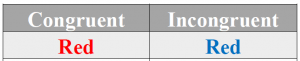
  • Color words are presented in different colors and participants are asked to name the color of the word, ignoring the word itself
  • Measures reaction time and accuracy as indicators of cognitive interference
Background(3): Key Findings


Stroop (1935) found that participants were slower and less accurate when naming colors on incongruent trials compared to congruent ones


  • This effect has been replicated across hundreds of studies, making it one of the most reliable findings in cognitive psychology

Theoretical Explanations

Relative Speed of Processing

  • Words are read faster than colors are named, so the word meaning always reaches the response stage first and interferes with color naming (MacLeod 1991)

Automaticity

  • Reading is so deeply practiced that it happens automatically.
  • Our brains process the word meaning even when we are trying to ignore it, which interferes with the slower, deliberate process of color naming

Methods

Our study aimed to replicate the Stroop effect

  • We designed a computer task following the Stroop Task protocol introduced earlier, with each word being shown on the screen for 500 ms
  • Participants would not move on to the next word until they gave a response
  • 10 words/ trial -> 3 trials
  • Hypothesis: Participants will show slower reaction times and lower accuracy on incongruent trials compared to congruent trials

Making the Task - An Important Feature

  • Being able to store and save your data to a platform is important for organization, analysis, collaboration
import csv
import datetime

## MAKING THE CSV FILE
def init_csv():
    """Initialize CSV file with headers"""
    
    participant_id = input("Enter participant ID: ")
    
    timestamp = datetime.datetime.now().strftime("%Y%m%d_%H%M%S")
    
    filename = f"stroop_{participant_id}_{timestamp}.csv"
    
    with open(filename, 'w', newline='') as csvfile:
        fieldnames = ["trial", "word_number", "match", "reaction_time", "correct"]
        writer = csv.DictWriter(csvfile, fieldnames=fieldnames)
        writer.writeheader()
    
    return filename

## INPUTTING RESULTS TO CSV
def save_result_to_csv(trial_num, word_num, match_status, rt, correct_status):
    """Save one trial to CSV file"""
    
    with open(csv_filename, 'a', newline='') as csvfile:
        fieldnames = ["trial", "word_number", "match", "reaction_time", "correct"]
        writer = csv.DictWriter(csvfile, fieldnames=fieldnames)
        
        writer.writerow({
            "trial": trial_num,
            "word_number": word_num,
            "match": str(match_status),
            "reaction_time": rt,
            "correct": str(correct_status)
        })

Making The Task - Coding


We used pygame to code this task, so we had lots of help from LLMs and the Pygame Documentation Webpage

Results

Descriptives - Reaction Time & Accuracy

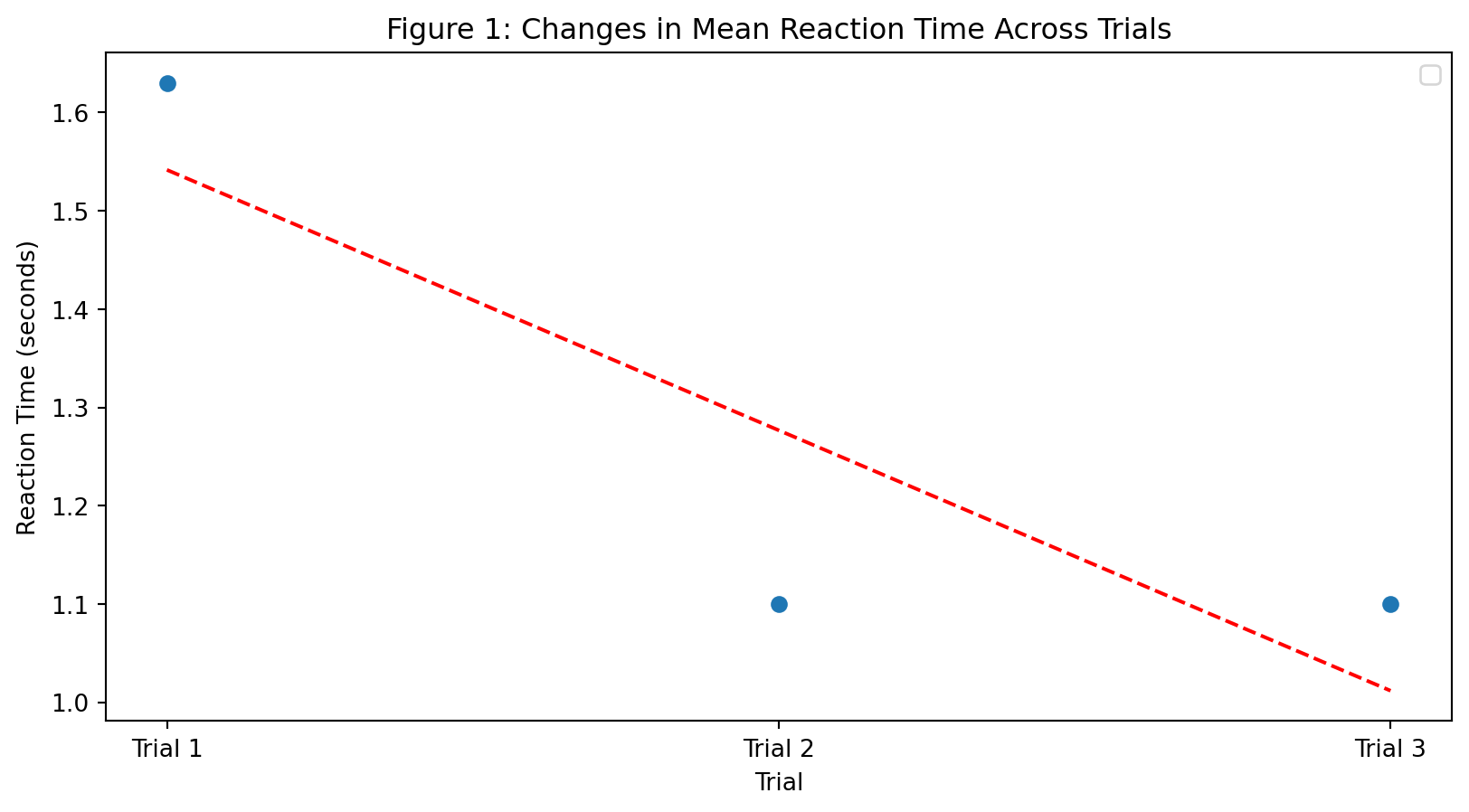
  • Mean reaction time is 1.28 seconds.
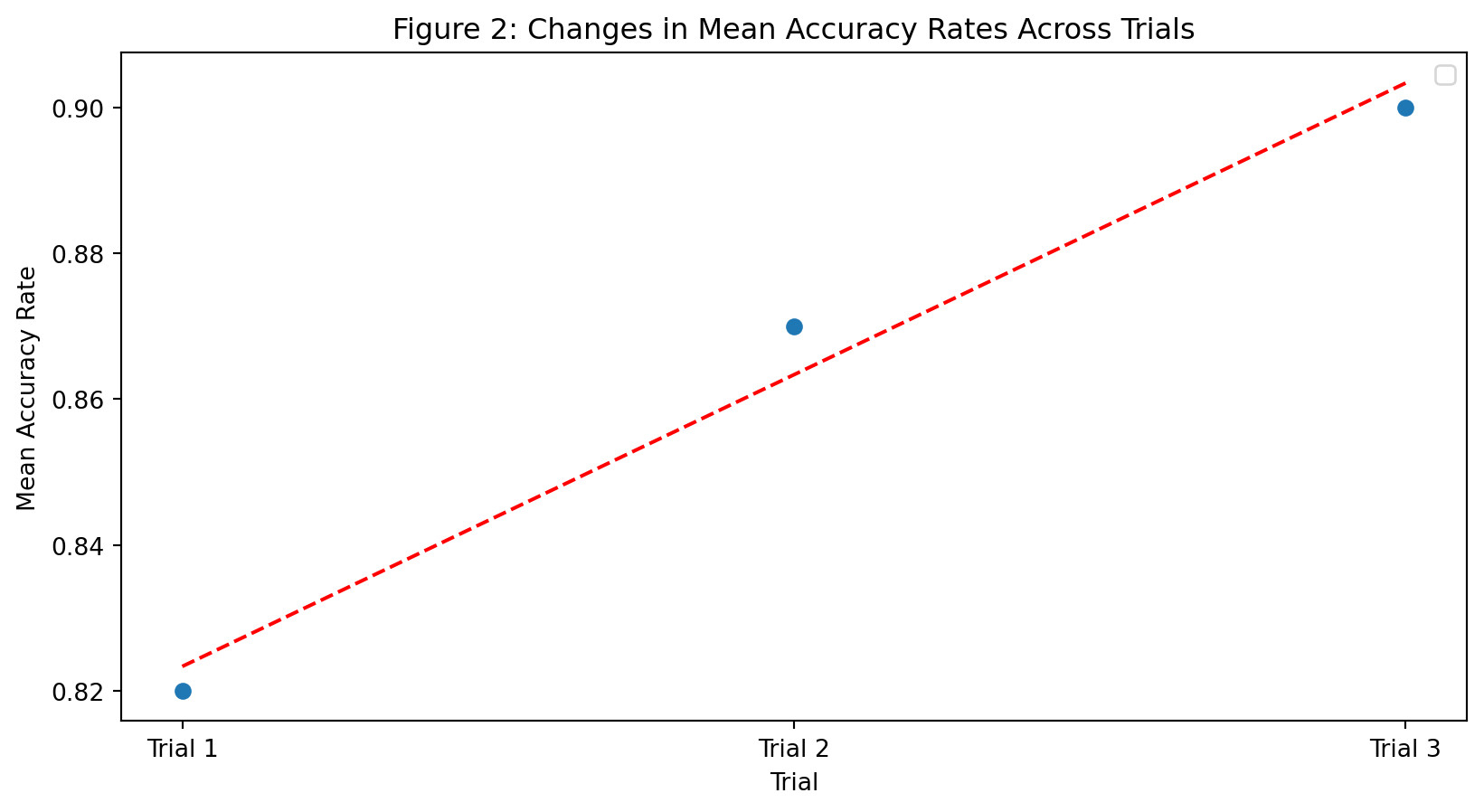
  • Mean accuracy rate is 86.4%.

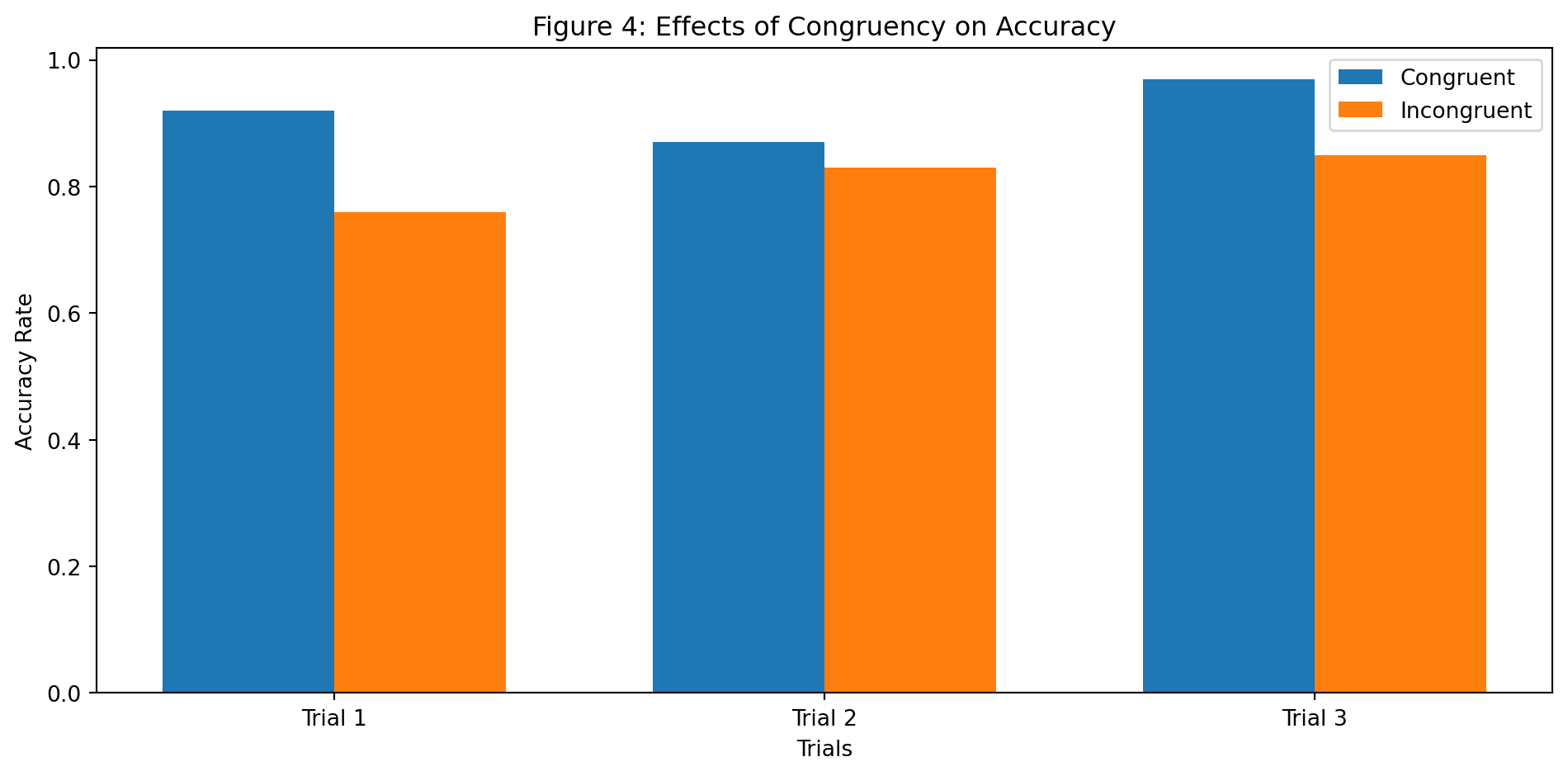
Descriptives - Effects of Congruency on RT & Accuracy

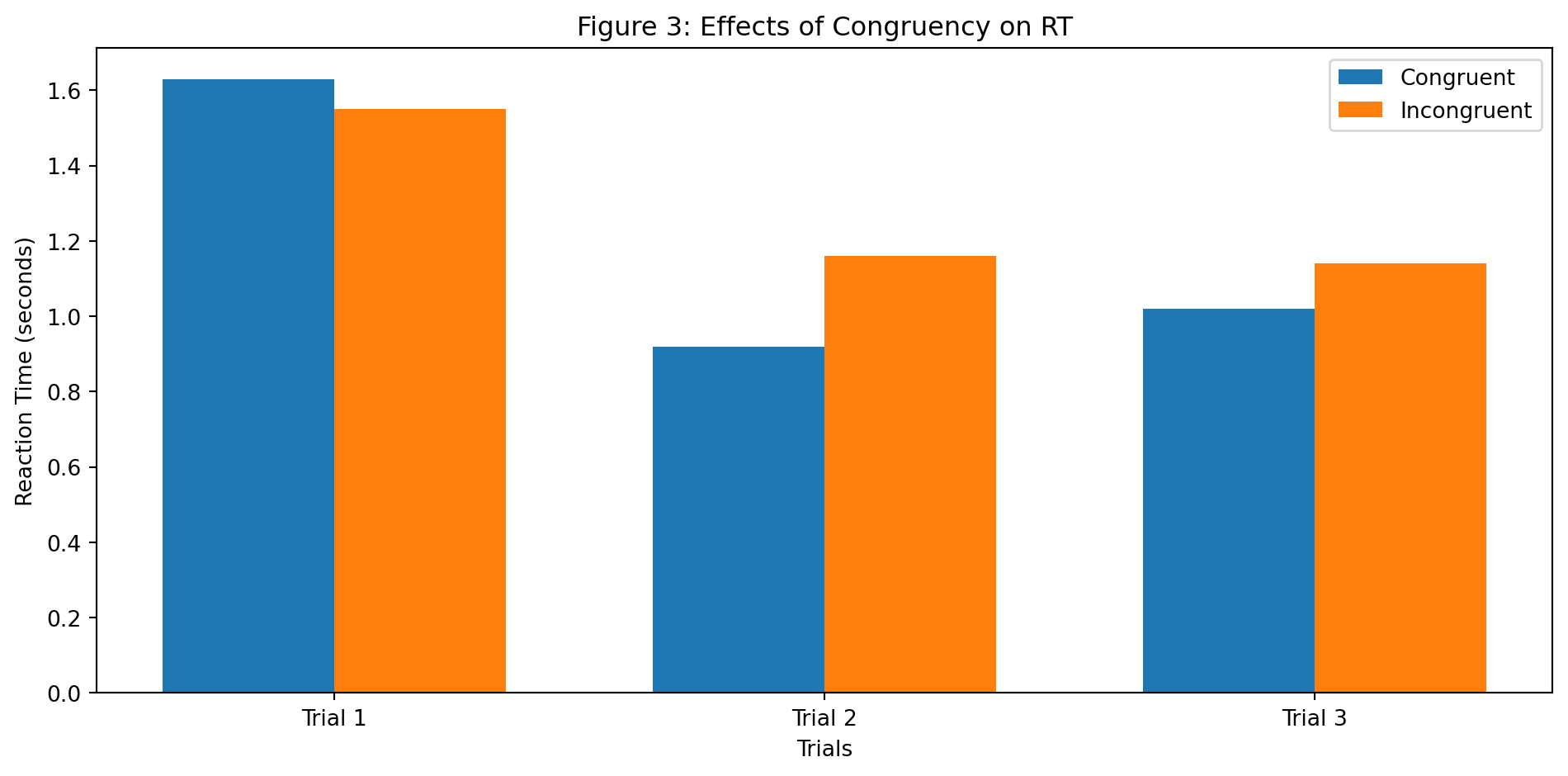
  • Mean reaction time in incongruent trials is 1.28 seconds VS in congruent trials it’s 1.19 seconds
  • Mean accuracy rate in incongruent trials is 81.3% VS in congruent trials it’s 92.0%
Analysis

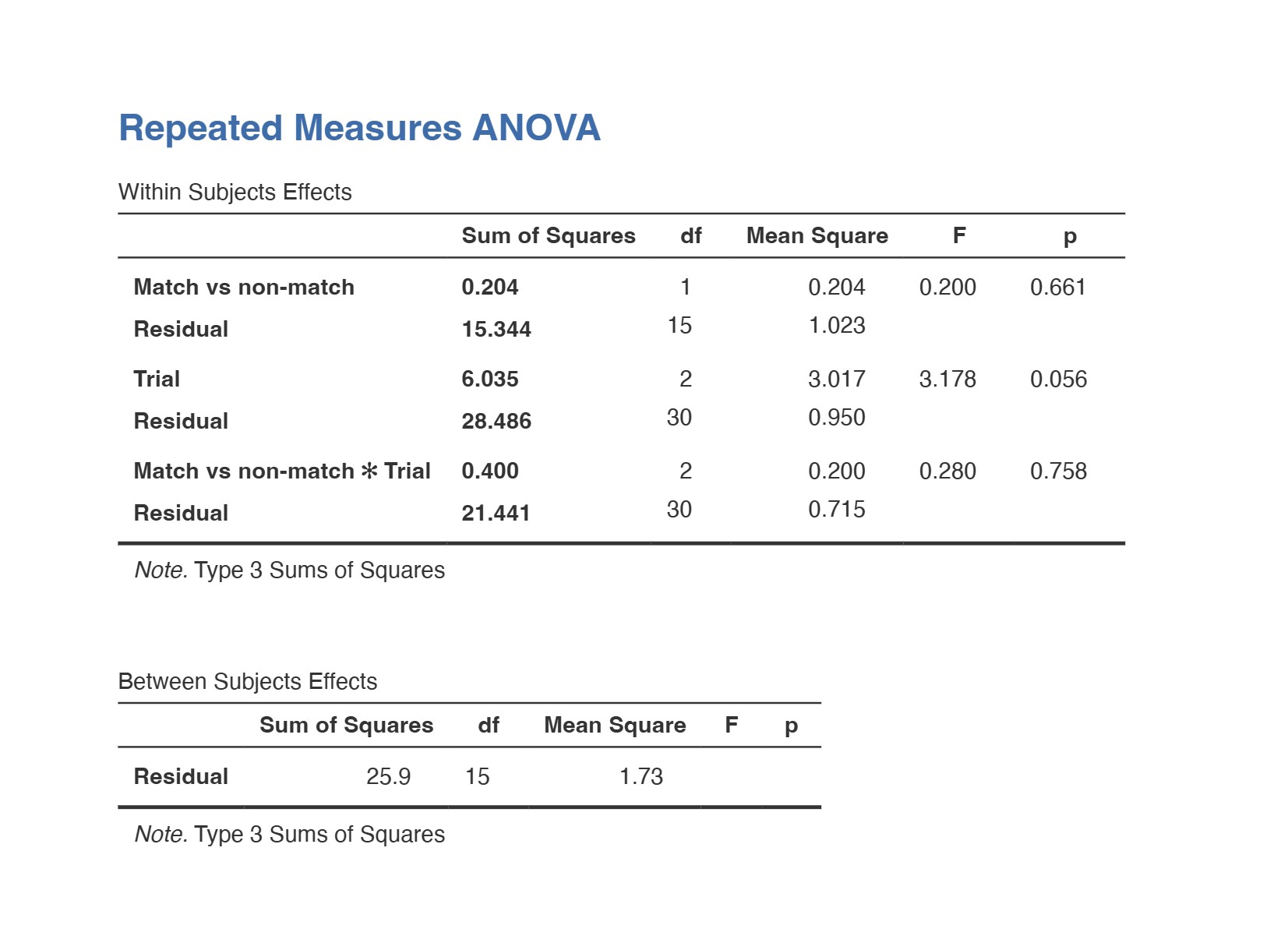
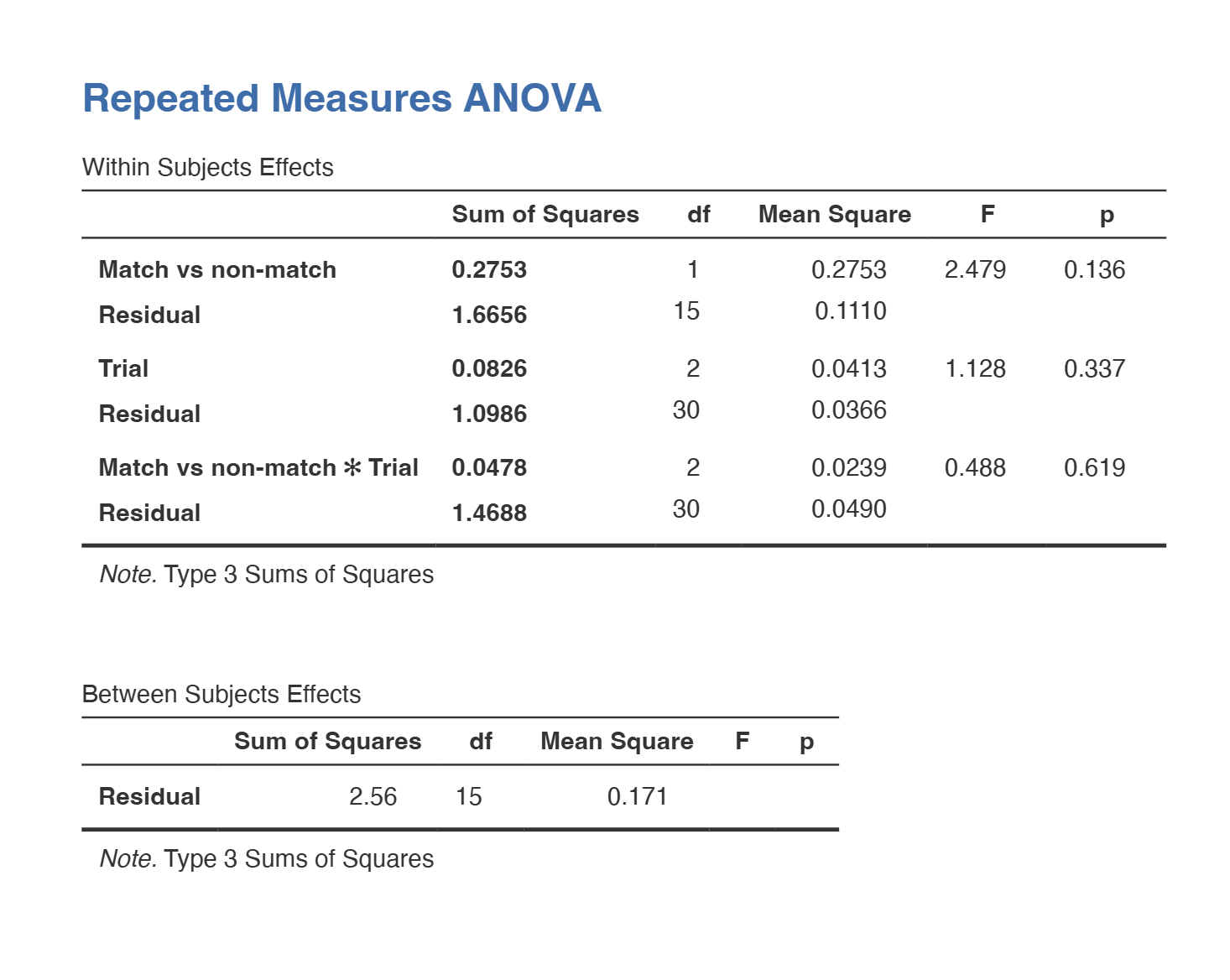
Two 2-Way Repeated Measures ANOVA tests were performed examining the main effects of trial and congruency on reaction time and accuracy, in addition to their interactions on both.

  • Table 1
  • Table 2

Discussion

  • No significant Stroop effect (p = 0.661) or interaction (p = 0.758)
  • While speeds improved across trials (p = 0.056), outliers of 13s and 19s inflated the Mean Square Residual (1.023), masking the actual effect
  • High accuracy (90%) and keyboard latency further confounded results
  • Due to these factors and a small sample (n = 16), we fail to reject the null hypothesis

References


MacLeod, Colin M. 1991. “Half a Century of Research on the Stroop Effect: An Integrative Review.” Psychological Bulletin 109 (2): 163–203. https://doi.org/10.1037/0033-2909.109.2.163.
Stroop, J. R. 1935. “Studies of Interference in Serial Verbal Reactions.” Journal of Experimental Psychology 18 (6): 643–62. https://doi.org/10.1037/h0054651.